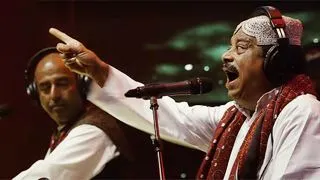
پِیا گھر آیا
Touch on each word to display its meaning
خواجہ غلام فَرِید فرماتے ہَیں :
یار بِنا مَیں
یار بِنا مین٘ڈھا جِیون کٌوڑھ اے
اَت انْدَر دَرْد ہَزاراں
یار بِنا
سوہنے یار بِنا
مین٘ڈھے یار بِنا
مین٘ڈھے یار
یار بِنا میرا جِیون کٌوڑھ ہے [ x2 ]
اَت انْدَر دَرْد ہَزاراں
یار فَرِیدا ( آہا )
یار فَرِیدا ، مَیں این٘ج کُڑ لاواں
جِیویں وِچْھڑاں کُون٘ج قَطاراں
The Master Ghulam Farid has proclaimed:
"Without the beloved,
without the beloved, life is bitter;
and inside, a thousand pains."
"Without the beloved,
without the beautiful beloved,
without my beloved,
without my Beloved,
without the beloved, life is bitter.
And inside, a thousand pains."
Dear Farid, (¡aha!)
Dear Farid, I will carve my own path,
like separate lines of migrating cranes.
اَور بُلّھے شاہ فرماتے ہَیں :
میرا پِیا گھر آیا
ہو لال نی میرا پِیا گھر آیا [ x3 ]
ہو
پِیا گھر آیا سَانُوں اللہ ملایا [ x2 ]
ہُن آپے کَرْدا نِہال نی
میرا پِیا گھر آیا سَانُوں اللہ ملایا
میرا پِیا گھر آیا
And Bulleh Shah has proclaimed:
My beloved came home,
oh my little rosy one!, my beloved came home. [x3]
Oh,
The Beloved came, Allah has united us! [x2]
Now He makes me happy.
My beloved came, Allah has united us!
My beloved came home.
ہو وہ مین٘ڈھا پِیا
مین٘ڈھا پِیا
مین٘ڈھا پِیا
اے آمَدَنعِش
اے آمَدَنعِش بَعاِسے آبادئِ ماو
میرا پِیا گھر آیا [ x3 ]
میرا پِیا
آؤ نی سَیّوں [ x3 ]
مَینوں دیو بَدھائ
میرا پِیا گھر آیا
ہو لال نی میرا پِیا گھر آیا
Oh, he is my beloved,
my beloved,
my beloved.
Ah, his arrival…
His joyful arrival at this my house…
My beloved came home. [x3]
My beloved…
Come, oh dear ones, [x3]
give me congratulations:
My beloved came home,
oh my little rosy one, my beloved came home!
ہو ، وہ آتے ہَیں ( آہا )
وہ آئیں گے
ہا
وہ آتے ہَیں
وہ آئیں گے
وہ آنے کو ہَیں
وہ آئے
[ the 3 lines x2 ]
Oh, he is coming (¡ah!)
he will come,
Ha!
He comes.
He will come.
He is about to arrive.
He came.
[the 3 lines x2]
او بُلّھے شاہ فرماتے ہَیں ( آہا ):
اُس رب نوں منانا اوکھا نَہِیں [ x6 ]
دو نَفَل پڑھو رب مَن جانْدا [ x2 ]
اُس رب نوں منانا اوکھا نَہِیں [ x4 ]
میرے رب کو منانا تو بَہُت آساں ہے
اُس کے حُضُور میں دو رَکعَت نَفَل پیش کَر دو
وہ مَن جاتا ہے
ارے بھائی نَفِل تو بَہُت بَڑی بات ہے
نَفِل کی نَقْل ہی کَر لو
ہو
میرا پِیا گھر آیا [ x2 ]
"Oh," declares Bulleh Shah (¡aha!):
"To please that God is not difficult." [x6]
"Pray two nafil, and God is pleased." [x2]
"To please that God is not difficult." [x4]
Pleasing my Lord is very simple;
in His presence, offer two brief prayers,
and He is pleased.
Oh brother!, even the optional prayers are too much:
just imitate the act of praying.
Oh…
my beloved came home. [x2]
اُس رب نوں منانا اوکھا نَہِیں [ x4 ]
دو نَفَل پڑھو رب مَن جانْدا [ x4 ]
جے یار کِسے دا رُس جاوے [ x4 ]
نچ نچ کے منانا پَینْدا اے
میرا پِیا گھر آیا [ x2 ]
جے یار کِسے دا رُس جاوے [ x4 ]
نچ نچ کے منانا پَینْدا اے
میرا پِیا گھر آیا [ x2 ]
[ last 3 lines x2 ]
To please that Lord is not difficult. [x4]
Pray two nafil, and the Lord is pleased. [x4]
If the beloved becomes angry with someone, [x4]
you must appease him by dancing.
My beloved came home. [x2]
If the beloved becomes angry with someone, [x4]
you must appease him by dancing.
My beloved came home. [x2]
[the last 3 lines x2]
فرماتے ہَیں :
او ،
کِہ حال سُناواں ( ہائے ہائے ہائے )
کِہ حال سُناواں ( آہا ) دِل دا وے
( ہے ) کوئی مَحرَم راز نَہ مِلْدا
[ last 2 lines x2 ]
او
رانْجَھن رانْجَھن کوک پھری مَینوں رانجھنا مِلْیا نَہِیں [ x4 ]
رب مِلْیا جے مَینوں رانجھا جے نَہ مِلْیا
رب ، رَان٘جھے جیر دی نَہ تَکّو
میرا پِیا گھر آیا [ x2 ]
He proclaimed:
"Oh,
So that I can my state (¡ay, ay, ay!)…
So that I can tell the state of my heart (¡ah!)…
My secret has found no confidant."
[the last 2 lines x2]
Oh,
I wandered crying "Ranjha, Ranjha!" but did not find Ranjha. [x4]
If I did not find Ranjha, I found the Lord.
Lord, do not attempt to link me with Ranjha anymore.
My beloved came home. [x2]
او
پڑھ پڑھ عِلْم کِتاباں والا نام رَکھیو قاضی [ x3 ]
او
مَکّے جا کَر حَجّ پڑھ آیو نام رَکھیو حاجی [ x2 ]
پھڑ شَمْشِیر مُجاہِداں والی نام رَکھیو غازی [ x2 ]
ہو
بُلّھے شاہ نے کُج نَئِیں کِتا [ x3 ]
یار نوں کِتا راضی
میرا پِیا گھر آیا [ x2 ]
Oh,
From reading and studying scholarly texts, they call you "qazi" (judge). [x3]
Oh,
Having gone to Mecca and performed the "hajj", they call you pilgrim. [x2]
Having wielded the sword of holy warriors, they call you "conqueror". [x2]
Oh.
Bulleh Shah did none of that. [x3]
He only pleased the beloved.
My beloved came home. [x2]
ہو میرا [ x3 ]
پِیا پِیا پِیا پِیا [ x4 ]
Oh, my… [x3]
beloved, beloved, beloved, beloved. [x4]
پڑھ پڑھ عالِم فاضِل ہویا
کَدے اپْنے آپ نوں پَڑھیا نَہِیں
جا جا وڑدا [ x2 ]
مَنْدَر مَسِیتاں اویٔے
کَدے مَن اپْنے وِچ وَڑیا نَئِیں
ایوئیں روز شَیطان نال لَڑدا [ x2 ]
کَدے نَفْس اپْنے کولوں لَڑیا نَہِیں
وے بُللیہ آسْمانیاں اُڑدِیاں پھاڑدا [ x2 ]
جیڑا گھر بَیٹھا اونُوں پھَڑِیا نَہِیں
و
میرا پِیا گھر آیا [ x2 ]
From so much reading, he became a notable scholar,
but he never read himself.
Going again and again
to temples and mosques,
he never penetrated his own heart.
Daily he fought in vain with Satan,
never fought his own carnal ego.
Oh, Bulleh, you catch what flies in the sky,
but you do not seize the one sitting at home.
Oh…
My beloved came home. [x2]
او تَوَجُّہ کا طالِب ہوُں
دیکھی جیئے کِس طَرَح بُزُرْگوں نے
مَجاز کے روپ میں حقیقت کو سمجھایا ہے
فرماتے ہَیں :
مجنوں نوں رَلْ عاشِق کَہِنْدے
مجنوں سے تَمام عاشقوں نے مِل کَر کہا
عاشِق ، یانی ، پْروفیشنَل عاشِق وہ بھی
مجنوں نوں رَلْ عاشِق کَہِنْدے
کِہ کَہِنْدے ؟
وے تیری لَیلی رنگ دی کلی
مجنوں نوں رَلْ عاشِق کَہِنْدے وے ( کِہ ؟)
تیری لَیلی رنگ دی کلی ( جا جا ) [ x4 ]
[ last 3 lines x2 ]
Oh, I seek your attention:
see how the ancients
explained reality through metaphors:
They declare:
To Majnun, the gathered lovers call him…
The lovers, having gathered, say to him:
(the lovers, that is, even professional lovers),
The lovers say to Majnun …
What do they say?
"Eh, the color of your Laila is dark!"
The lovers, gathered, say to Majnun … (what?)
"The color of your Laila is dark" (go, go). [x4]
[the last 3 lines x2]
دِتا جواب مجنوں میاں ؟
مجنوں کو سب مِل کے پاگل سمجھتے ہَیں
اَور اکیلا مجنوں سب کو پاگل سمجھتا ہے
کہتا ہے
کِتا جواب مجنوں میاں
وہ جا تیری اکھ نَہِیں ویکھن والی
اب دَلِیل کْیا دیتا ہے
قُرْآن کَرِیم دے وَرَق نے چِٹّے [ x2 ]
اُتّے لکھی اے سِیاہی کلی
وے بُللیہ جِتھے دِل اَڑْ جاوے [ x2 ]
پھیر کِہ گَوری کِہ کلی وے
میرا پِیا گھر آیا [ x3 ]
And what answer did Mister Majnun give?
(all the gathered consider Majnun mad
and Majnun alone considers everyone mad)
He says,
Mister Majnun responds:
“Go, your eyes no longer know how to see.”
And now, what argument does he give?
“The pages of the Noble Quran are white, [x2]
upon them is written black ink.”
Oh Bulleh, where the heart is stubborn, [x2]
what problem is there with white or black?
My beloved came home. [x3]
گھڑی گھڑی گَھڑِیال بَجاوے [ x2 ]
رات وَصَل دی پَیا گَھٹاوے [ x2 ]
میرے دِل دی بات جے پاویں [ x2 ]
ہاتھوں جا سُٹو گَھڑِیال نی !
میرا پِیا گھر آیا [ x10 ]
Again and again the gong marks the hour [x2]
and the night of union shortens. [x2]
If I paid attention to what my heart says [x2]
Ah, I would quiet that gong with my own hands!
My beloved came home. [x10]
About this song
piyaa ghar aayaa (Hindi: पिया घर आया, Urdu: پِیا گھر آیا) — “The Beloved Came Home”, also known as “meraa piyaa ghar aayaa” (“My Beloved Came Home”) — is a song inspired by a famous kalaam (devotional poem) by the 18th-century Sufi poet and mystic Bulleh Shah.
Written in a mixture of languages including Hindustani, Punjabi, and Saraiki, it was performed in 2018 during Season 11, Episode 3 of the Pakistani musical series Coke Studio, in a powerful qawwali rendition by Fareed Ayaz & Brothers and Abu Muhammad.
The piece belongs to the centuries-old Qawwal Bachon ka Gharana tradition, known for its intricate vocal improvisations and rhythmic dialogue between lead and chorus. The lyrics celebrate the ecstatic return of the piyaa (“beloved”), an image that, while couched in mystical language, carries an evident homoerotic and devotional undertone, typical of much Sufi poetry — where divine love is expressed through the language of human longing and union.