rang
Touch on each word to display its meaning
[ soloist #1 ]
[ melisma ]
maaTii ke tum diivre
jo suniyo hamaarii baat
aaj milaavaaraa mohe piyaa kaa
jo jaagiyo saarii raat !
[soloist #1]
[melisma]
Oh, lamps of clay
who listen to my word:
today is, for me, the encounter of lover/guide,
so stay awake all night!
[ chorus ]
aaj rang hai rii maaN , rang hai rii
[ soloist #1 repeats x2 , then choir ]
[chorus]
Today there is color, oh mother!
[soloist #1 repeats x2, then choir]
aaj rang hai rii maaN , rang hai rii
more xvaajaa ke ghar rang hai rii
[ soloist #1 , then chorus repeats ]
Today there is color, oh mother!
At my Master home, there is color!
[soloist #1, then chorus repeats]
[ soloist #1 ]
aaj sajan milaavaaraa more aaNgan meN
[ choir ]
sajan milaavaaraa more aaNgan meN
[ soloist #1 and choir repeat chorus ]
[soloist #1]
Today, my beloved lover is in my yard
[choir]
my beloved lover is in my yard
[soloist #1 and choir repeat chorus]
[ soloist #2 ]
rainii chaRhrii
rasuul kii .
so rang maulaa ke haath .
jaa kaa chuunar rang diyo
so dhan-dhan vaa ke bhaag
[ soloist #2 and choir repeat chorus ]
[ several times in call-and-response ]
[soloist #2]
The night / dye of the Messenger
rose.
This color, is the Lord's hand.
Whoever (whosever form) be colored
fortunate, fortunate is his lot!
[soloist #2 and choir repeat chorus]
[several times in call-and-response]
mere maHbuub ke ghar ,
e rii sakhii rii ,
maHbuub ke ghar !
[ soloist #2 repeats stanza ]
[ several times with choir ]
[ soloist #2 and choir repeat chorus ]
[ several times in call-and-response ]
At my dear's home,
ah, oh, my friend,
at my dear's home!
[soloist #2 repeats stanza
several times with choir]
[soloist #2 and choir repeat chorus]
[several times in call-and-response]
[ soloist #1 sings and choir repeats ]
[ every 2 verses ]
mohe piir paayo :
nizaamuddiin auliyaa .
nizaamuddiin auliyaa ,
mohe piir paayo
saabir 3alaauddiin auliyaa ,
mohe piir paayo
[soloist #1 sings and choir repeats]
[every 2 verses]
I got me a guide:
Nizamuddin Auliya
Nizammuddin Auliya,
I got me a guide
Alauddin Auliya, "the Patient"
I got me a guide
nizaamuddiin auliyaa ,
nizaamuddiin auliyaa ,
3alaauddiin auliyaa
[ choir repeats ]
[ soloist #1 ]
nizaamuddiin auliyaa ,
3alaauddiin auliyaa ;
maiN to jab dekhuuN ,
more sang hai rii
maaN , rang hai rii !
[ choir repeats several ]
[ times along with soloist #1 ]
[ soloist #1 repeats chorus ]
Nizamuddin Auliya,
Nizamuddin Auliya,
Alauddin Auliya
[choir repeats]
[soloist #1]
Nizamuddin Auliya,
Alauddin Auliya;
wherever I look,
is with me,
mother, oh, there is color!
[choir repeats several]
[times along with soloist #1]
[soloist #1 repeats chorus]
[ stanza A ]
[ soloist #2 ]
desh videsh meN DhuuNRD phirii huuN
[ choir repeats , soloist repeats ]
toraa rang
man bhaayo nizaamuddiin
[ choir and soloist #2 repeat ]
[ several parts of the stanza ]
[stanza A]
[soloist #2]
I wander everywhere,
[choir repeats, soloist repeats]
Your color
pleased (my) mind, Nizamuddin
[choir and soloist #2 repeat]
[several parts of the stanza]
(But) forgetfulness just remains, mother
[ stanza B ]
maiN , to , aiso rang …
ho , maHbuub-ilaahii
[ choir repeats whole stanza ]
[stanza B]
Such a color, I just …
Ho, God's beloved!
[choir repeats whole stanza]
[ melisma ]
khusro , re ,
suhaag kii so maiN
jaagii pii ke sang
[ repeats stanza with melisma ]
tan moraa ,
man pii huuN kaa ;
[ choir repeats ]
so donoN ek hii rang
[ repeats stanza B ]
[melisma]
Khusro,
This (night) of marital bliss,
I stayed awake with my husband
[repeats stanza with melisma]
(My) body, I,
belong to my beloved's mind;
[choir repeats]
Both are just this one color
[repeats stanza B]
[ soloist #1 sings ]
[ with melisma ]
e gokul dekhaa ,
mathuraa dekhaa
[ repeats the 2 stanzas ]
puurab dekhaa ,
pashchim dekhaa ,
uttar dekhaa ,
dakkhin dekhaa ,
[ choir repeats ]
par tosaa na koii
rang dekhaa , re !
[ soloist #1 and choir ]
[ repeat stanza B ]
[soloist #1 sings]
[with melisma]
Ho, I looked Gokul,
I looked Mathura
[repeats the 2 stanzas]
I looked the east,
I looked the west
I looked the north,
I looked the south,
[choir repeats]
but alas, I didn't see
any color such as yours!
[soloist #1 and choir]
[repeat stanza B]
[ soloist #2 ]
phirii zamaane meN
chaar jaanib
allaah !
nigaar-e-yaktaa
tumheN ko dekhaa .
Hasiin dekhe ,
jamiil dekhe ,
bas ek tum saa
tumheN ko dekhaa
[ soloist #2 and choir repeat stanza B ]
[soloist #2]
I wandered
the four directions in the world
God!
(But still ) I saw you
(my) unique beloved.
I saw the handsome,
I saw the beautiful,
in short, I saw you,
(only) one like you
[soloist #2 and choir repeat stanza B]
[ soloist #1 repeats stanza A ]
[ soloist #1 sings in ecstatic ]
[ accelerando , in call-and-response ]
[ with choir after each verse ]
e jag … jag … jag … jag
jag … jag … jag ujiyaaro
jag ujiyaaro ,
jagat ujiyaaro
xvaajaa nizaamuddiin ,
jagat ujiyaaro
saabir 3alaauddiin ,
jagat ujiyaaro
[soloist #1 repeats stanza A]
[soloist #1 sings in ecstatic]
[accelerando, in call-and-response]
[with choir after each verse]
Ho, the world … world … world … world,
the world … world … he makes bright.
Makes the world bright,
makes the creation bright.
Master Nizamuddin
makes the creation bright
Alauddin "the Patient"
makes the creation bright
[ soloist #1 and choir repeat parts of ]
[ the stanza in call-and-response ]
e meharbaan
ras buuNdaa barse
xvaajgaan-ke-darbaaraan meN ,
aaj dekho ghan garje !
… ras buuNdaa barse …
[soloist #1 and choir repeat parts of]
[the stanza in call-and-response]
Ho, merciful,
droplets (of) relish rained,
At the Court of the Masters,
today, look the clouds thundering!
… droplets (of) relish rained …
[ soloist #1 enumerates ]
[ and choir repeats ]
xvaajaa fariid-ud-diin auliyaa ,
qutub-ud-diin auliyaa ,
xvaajaa moinuddiin auliyaa ,
xvaajaa qutub-ud-diin auliyaa ,
xvaajaa nizaamuddiin ,
xvaajaa نصیر الدّین
[soloist #1 enumerates]
[and choir repeats]
Master Fariduddin Auliya,
Qutbuddin Auliya,
Master Moinuddin Auliya,
Master Qutbuddin Auliya,
Master Nizamuddin,
Master Nasiruddin
aaj ,
shohraa nizaam نصیر الدّین kaa
laal maHbuub banaa
[ choir repeats verse several times ]
nizaamuddiin jag ujiyaaro
[ choir repeats ]
[ soloist #2 repeats ]
jagat ujiyaaro , jagat ujiyaaro
[ choir and soloist #1 ]
[ repeat several times ]
jag ujiyaaro ,
jagat ujiyaaro
Today,
Nasiruddin's renowned "Nizam"
became (my) precious darling
[choir repeats verse several times]
Nizzamudin Auliya makes the world bright
[choir repeats]
[soloist #2 repeats]
makes the creation bright [x2]
[choir and soloist #1]
[repeat several times]
makes the world bright,
makes the creation bright
[ soloist #2 ]
terii suurat se
kisii kii nahiiN miltii suurat
[ repeats with melisma ]
ham jahaaN meN terii tasviir liye phirte haiN
[ repeats stanza B ]
[ choir repeats stanza B ]
[soloist #2]
Like your countenance,
I know no ones' countenance.
[repeats with melisma]
We travel with your image everywhere
[repeats stanza B]
[choir repeats stanza B]
[ soloist #1 ]
nizaamuddiin auliyaa jag ujiyaaro
jag ujiyaaro ,
jagat ujiyaaro
[ both soloists and choir repeat ]
[ soloist 1 ]
vo to jo maaNge barsat hai rii ;
maaN , rang hai rii !
[ choir repeats ]
[ soloists repeat chours in melisma ]
[soloist #1]
Nizzamudin makes the world bright,
makes the world bright,
makes the creation bright
[both soloists and choir repeat]
[soloist 1]
So, anything he asks, it rains;
oh, mother, there is color!
[choir repeats]
[soloists repeat chours in melisma]
About this song
- Singers
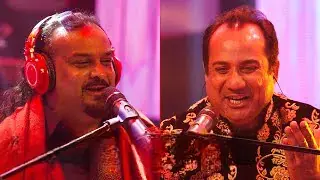
- Rahat Fateh Ali Khan, Amjad Sabri
- Show
- Coke Studio (2016)
rang or Aaj Rang Hai Ri Maan Rang Hai Ri, (Hindi: रंग, Urdu: رنگ ) "Color" / "Today There Is Color, Oh, Mother" is a poem by the famous medieval Sufi poet and scholar Amir Khusro, regarded as the "Father of Qawwali"
The poem tells how Khusro comes back home after having found his spiritual guide, Sufi saint Nizamuddin Auliya, and describes the experience to his mother.
The lyrics performed in this Coke Studio video are an arrangement of that ancient poem, mostly respecting the essence of the original.
It was written in a mixture of Hindustani and Braj or "Braj Bhasha", a North Indian dialect that still exists today, much diminished, but was a major literary choice in medieval times.
This is a style of qawwali called "kalam", in which tempo and intensity increase as the music progresses, to symbolize the mystic trance of the singers.
The performers are two famous Pakistani singers: Rahat Fateh Ali Khan and Amjad Sabri.
Both belong to famous families of qawwali singers: Rahat is the nephew of the famous Nusrat Fateh Ali Khan, and Ajmad is the son of Ghulam Farid, one of the equally famous "Sabri Brothers" band.
It is worth noting that these two predecessors, Nusrat and the Sabri Brothers, had also sung this qawwali together on the occasion of the commemoration of the death of the Sufi leader Moinuddin Chishti in Ajmer, India (believed to have been in 1983, although the date is not exact).