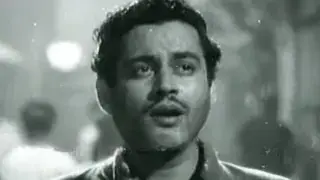
jinheN naaz hai hind par
Touch on each word to display its meaning
Those Who are Proud of India
ye kuuche , ye niilaam ghar dilkshii ke [ x2 ]
ye luTte hue kaarvaaN zindagii ke
kahaaN haiN , kahaaN hai , muHaafiz xudii ke
jinheN naaz hai hiNd par vo kahaaN haiN
kahaaN haiN … [ x3 ]
These lanes, these auction houses of charm
These plundered caravans of life
Where, oh, where, are the guardians of pride?
Those who are proud of India, where are they?
Where are they … [x3]?
ye pur-pech galiyaaN , ye badnaam baazaar
ye gumnaam raahii , ye sikkoN kii jhaNkaar
ye ismat ke saude , ye saudoN pe takraar
jinheN naaz hai hiNd par vo kahaaN haiN
kahaaN haiN … [ x3 ]
These crooked alleys, these ignominious marketplaces,
these anonymous pedestrians, this jingling of coins,
These bargains of chastity, this wrangling over the bargains,
Those who are proud of India, where are they?
Where are they … [x3]?
ye sadiyoN se be-xvaab , sahmii sii galiyaaN
ye maslii huii adhkhilii zard kaliyaaN
ye biktii huii khokhlii rangarliyaaN
jinheN naaz hai hiNd par vo kahaaN haiN
kahaaN haiN … [ x3 ]
These streets, for centuries dreamless, like frightened,
These livid half-blossomed buds
These artificial reveries for sale
Those who are proud of India, where are they?
Where are they … [x3]?
vo ujle dariichoN meN paayal kii chhan-chhan
thakii-haarii saaNsoN pe table kii dhan-dhan
ye beruuH kamroN meN khaaNsii kii Than-Than
jinheN naaz hai hiNd par vo kahaaN haiN
kahaaN haiN … [ x3 ]
The cham-cham of anklets in illuminated windows
Over the jaded breathings, the dhum-dhum of a tambourine
In the soulless rooms, the thumping of a cough
Those who are proud of India, where are they?
Where are they … [x3]?
ye phuuloN ke gajre , ye piikoN ke chhiiNTe
ye bebaak nazreN , ye gustaax fiqre
ye Dhalke badan aur ye biimaar chehre
jinheN naaz hai hiNd par vo kahaaN haiN
kahaaN haiN … [ x3 ]
These garlands of flowers, these betel spits
These shameless looks, these impertinent taunts
These run-down bodies and these sickly faces
Those who are proud of India, where are they?
Where are they … [x3]?
yahaaN piir bhii aa chuke haiN , javaan bhii
tanomaNd beTe bhii , abbaa , miyaaN bhii
ye biivii bhii hai …
ye biivii bhii hai aur bɛhɛn bhii hai , maaN bhii
jinheN naaz hai hiNd par vo kahaaN haiN
kahaaN haiN … [ x3 ]
The seniors had come over here already, and now also the young!
Robust sons, and also the father, the husband.
This is a wife too …
This is a wife, and a sister, and a mothers!
Those who are proud of India, where are they?
Where are they … [x3]?
madad chaahtii hai ye Hauvaa kii beTii
yashodaa kii hamjiNs , raadhaa kii beTii
paymbar kii ummat , zulykhaa kii beTii
jinheN naaz hai hiNd par vo kahaaN haiN
kahaaN haiN … [ x3 ]
She needs help, this daughter of Eve
The like of Yashodha, the daughter or Radha,
The community of the Prophet, the daughter of Zulaikha
Those who are proud of India, where are they?
Where are they … [x3]?
zaraa mulk ke rehbroN ko bulaao
ye kuuche , ye galiyaaN , ye maNjar dikhaao
jinheN naaz hai hiNd par unko laao
jinheN naaz hai hiNd par vo kahaaN haiN
kahaaN haiN … [ x3 ]
Please, summon the leaders of the country
show them these lanes, these alleys, this cluster of flowers
Bring those who are proud of India
Those who are proud of India, where are they?
Where are they … [x3]?
About this song
- Singer
- Mohammed Rafi
- Lyrics
- Sahir Ludhianvi
- Music
- S.D. Burman
- On screen
- Guru Dutt
- Film
- Pyaasa (1957)
jinheN naaz hai hind par (Hindi: जिन्हें नाज़ है हिंद पर, Urdu: جنہیں ناز ہے ہِند پر) "Those Who are Proud of India" is a song played in the 1957 Bollywood film Pyaasa.
The movie is about an Urdu poet, Vijay (interpreted by Guru Dutt) who
struggles against a corrupt and materialistic world, with the setting of post-independence Calcutta.
The song is played while Vijay traverses one of the city's Red Light districts, and it is a plea against the dire conditions of the prostitutes.
The author of the lyrics was Sahir Ludhianvi.
Ludhianvi had previously authored a poem called Chakle, which he modified for the purposes of the movie.
Specifically, the appeal he makes to "those who are proud of India" in the song:
jinheN naaz hai hiNd par vo kahaaN haiN
those who take pride in India, where are they?
In the original poem was the much more complex izafat construction "those who recite prayers to the sanctity/purity of the East/Orient".
sanaa-xvaan-e-taqdiis-e-mashriq kahaaN haiN
those who recite prayers to the purity of the East, where are they?
The playback singer was Mohammed Rafi, and the composer and music director was S.D. Burman.