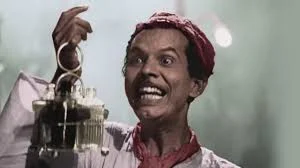
सर जो तेरा चकराए
Touch on each word to display its meaning
Rubbing! Oil rubbing massages!
सर जो तेरा चकराए , या दिल डुबा जाए
आ जा प्यारे पास हमारे , काहे घबराए , काहे घबराए
मालिश तेल मालिश
सर जो तेरा चकराए , या दिल डूबा जाए
आ जा प्यारे पास हमारे , काहे घबराए , काहे घबराए
If your head spins or your heart is exhausted
come near me, dear! why would you be afraid, why?
Rubbing, oil rubbing!
If your head spins or your heart is exhausted
come near me, dear! why would you be afraid, why?
तेल मेरा है मुशकी , गंज रहे न ख़ुश्की
जिस के सर पर हाथ फिरा दूँ , चमके क़िस्मत उस की
[ both lines x2 ]
सुन सुन सुन , अरे बेटा सुन ,
इस चंपी में बड़े बड़े गुण
[ both lines x2 ]
लाख दुखों की एक दवा है , क्यूँ न आज़माए
कहे घबराए , कहे घबराए
सर जो तेरा चकराए , या दिल डूबा जाए
आ जा प्यारे पास हमारे , काहे घबराए , काहे घबराए
My oil is musky, neither scald head nor dandruff stay
He whose head I turn my hand upon, his lot is bright!
[both lines x2]
Listen, listen, come on, boy, listen!
In this massage there are a great many merits!
[both lines x2]
It is one cure for hundreds of thousands of afflictions, why wouldn't you try?
Why be afraid, why?
If your head spins or your heart is exhausted
come near me, dear! why would you be afraid, why?
प्यार का होवे झगड़ा , या [ business ] का हो रगड़ा
सब लफ़ड़ों का बोझ हटे जब पड़े हाथ इक तगड़ा
[ both lines x2 ]
सुन सुन सुन , अरे बाबू सुन ,
इस चंपी में बड़े बड़े गुण
[ both lines x2 ]
लाख दुखों की एक दवा है , क्यूँ न आज़माए
कहे घबराए , कहे घबराए
सर जो तेरा चकराए , या दिल डूबा जाए
आ जा प्यारे पास हमारे , काहे घबराए , काहे घबराए
Be it a love quarrel, or a business altercation,
the burdens of all your problems cleared when one strong hand hits
[both lines x2]
Listen, listen, come on, boy, listen!
In this massage there are a great many merits!
[both lines x2]
It is one cure for hundreds of thousands of afflictions, why wouldn't you try?
Why be afraid, why?
If your head spins or your heart is exhausted
come near me, dear! why would you be afraid, why?
नौकर हो या मालिक , [ leader ] हो या [ public ]
अपने आगे सभी झुके हैं , क्या राजा क्या सैनिक
[ both lines x2 ]
सुन सुन सुन , अरे बेटा सुन ,
इस चंपी में बड़े बड़े गुण
[ both lines x2 ]
लाख दुखों की एक दवा है , क्यूँ न आज़माए
कहे घबराए , कहे घबराए
सर जो तेरा चकराए , या दिल डूबा जाए
आ जा प्यारे पास हमारे , काहे घबराए …
Be it a servant or a lord, be it leader or public
All have bowed before me, from king to soldier
[both lines x2]
Listen up my friend
There are many benefits from having a head massage
[both lines x2]
It's one solution for millions of problems, so why don't you try it
Why would you be afraid, why?
If your head spins or your heart is exhausted
come near me, dear! Why would you be afraid, why?
About this song
- Singer
- Mohammed Rafi
- Music
- S.D. Burman
- On screen
- Johnny Walker
- Film
- Pyaasa (1957)
sar jo teraa chakraae (Hindi: सर जो तेरा चकराए, Urdu: سر جو تیرا چکرائے) is a song from the 1957 Indian film drama "Pyaasa".
The movie is about a poet Vijay (played by the actor Guru Dutt) who denounces this world as hypocritical and materialistic.
At some point in the plot Vijay is committed into a mental institution, but a friend of his called Abdul Sattar (played by the comedic actor Johnny Walker) helps him escape.
The video clip shows Abdul Sattar offering a service of head massages wit oil on the street. This scene works as a temporary relief to the audience, from the drama unfolding in Vijay's life. Abdul pitches his massage as a cure for all ailments and problems.
The actor deliberately uses semi-illiterate clichés when pronouncing certain words, for example muskī for muśkī, or kuskī for xuśkī.
The song was composed by the enormously famous singer, director and composer S.D. Burman, and it was sung by the no less famous Bollywood playback singer Mohammed Rafi. The lyrics were written by the Urdu poet Sahir Ludhyanvi.