पिया घर आया
Touch on each word to display its meaning
ख़्वाजा ग़ुलाम फ़रीद फ़रमाते हैं :
यार बिना मैं
यार बिना मेंढ़ा जीवन कूढ़ ए
अत अंदर दर्द हज़ाराँ
यार बिना
सोहने यार बिना
मेंढ़े यार बिना
मेंढ़े यार
यार बिना मेरा जीवन कूढ़ है [ x2 ]
अत अंदर दर्द हज़ाराँ
यार फ़रीदा ( आहा )
यार फ़रीदा , मैं एँज कुड़ लावाँ
जिवैं बिछड़ाँ कूँज क़ताराँ
The Master Ghulam Farid has proclaimed:
"Without the beloved,
without the beloved, life is bitter;
and inside, a thousand pains."
"Without the beloved,
without the beautiful beloved,
without my beloved,
without my Beloved,
without the beloved, life is bitter.
And inside, a thousand pains."
Dear Farid, (¡aha!)
Dear Farid, I will carve my own path,
like separate lines of migrating cranes.
और बुल्लेह शाह फ़रमाते हैं :
मेरा पिया घर आया
हो लाल नी मेरा पिया घर आया [ x3 ]
हो
पिया घर आया सानूँ अल्लाह मिलाया [ x2 ]
हुन आपे करदा निहाल नी
मेरा पिया घर आया सानूँ अल्लाह मिलाया
मेरा पिया घर आया
And Bulleh Shah has proclaimed:
My beloved came home,
oh my little rosy one!, my beloved came home. [x3]
Oh,
The Beloved came, Allah has united us! [x2]
Now He makes me happy.
My beloved came, Allah has united us!
My beloved came home.
हो वह मेंढ़ा पिया
मेंढ़ा पिया
मेंढ़ा पिया
ऐ आमदनइश
ऐ आमदनइश बअइसे आबादी-ए-माऊ
मेरा पिया घर आया [ x3 ]
मेरा पिया
आओ नी सैय्यों [ x3 ]
मैनूँ दयो बधाई
मेरा पिया घर आया
हो लाल नी मेरा पिया घर आया
Oh, he is my beloved,
my beloved,
my beloved.
Ah, his arrival…
His joyful arrival at this my house…
My beloved came home. [x3]
My beloved…
Come, oh dear ones, [x3]
give me congratulations:
My beloved came home,
oh my little rosy one, my beloved came home!
हो , वे आते हैं ( आहा )
वे आएँगे
हा
वे आते हैं
वे आएँगे
वे आने को हैं
वे आए
[ the 3 lines x2 ]
Oh, he is coming (¡ah!)
he will come,
Ha!
He comes.
He will come.
He is about to arrive.
He came.
[the 3 lines x2]
ओ बुल्लेह शाह फ़रमाते हैं ( आहा ):
उस रब नूँ मनाना ओखा नहीं [ x6 ]
दो नफ़ल पढ़ो रब मन जांदा [ x2 ]
उस रब नूँ मनाना ओखा नहीं [ x4 ]
मेरे रब को मनाना तो बहुत आसाँ है
उस के हुज़ूर में दो रकअत नफ़ल पेश कर दो
वह मन जाता है
अरे भाई नफ़िल तो बहुत बड़ी बात है
नफ़िल की नक़ल ही कर लो
हो
मेरा पिया घर आया [ x2 ]
"Oh," declares Bulleh Shah (¡aha!):
"To please that God is not difficult." [x6]
"Pray two nafil, and God is pleased." [x2]
"To please that God is not difficult." [x4]
Pleasing my Lord is very simple;
in His presence, offer two brief prayers,
and He is pleased.
Oh brother!, even the optional prayers are too much:
just imitate the act of praying.
Oh…
my beloved came home. [x2]
उस रब नूँ मनाना ओखा नहीं [ x4 ]
दो नफ़ल पढ़ो रब मन जांदा [ x4 ]
जे यार किसे दा रुस जावे [ x4 ]
नच नच के मनाना पैंदा ए
मेरा पिया घर आया [ x2 ]
जे यार किसे दा रुस जावे [ x4 ]
नच नच के मनाना पैंदा ए
मेरा पिया घर आया [ x2 ]
[ last 3 lines x2 ]
To please that Lord is not difficult. [x4]
Pray two nafil, and the Lord is pleased. [x4]
If the beloved becomes angry with someone, [x4]
you must appease him by dancing.
My beloved came home. [x2]
If the beloved becomes angry with someone, [x4]
you must appease him by dancing.
My beloved came home. [x2]
[the last 3 lines x2]
फ़रमाते हैं :
ओ ,
कि हाल सुनावाँ ( हाय हाय हाय )
कि हाल सुनावाँ ( आहा ) दिल दा वे
( है ) कोई महरम राज़ ना मिलदा
[ last 2 lines x2 ]
ओ
रांझन रांझन कूक फिरी मैनूँ रांझणा मिल्या नहीं [ x4 ]
रब मिल्या जे मैनूँ राँझा जे ना मिल्या
रब , राँझे जेर दी ना तक्को
मेरा पिया घर आया [ x2 ]
He proclaimed:
"Oh,
So that I can my state (¡ay, ay, ay!)…
So that I can tell the state of my heart (¡ah!)…
My secret has found no confidant."
[the last 2 lines x2]
Oh,
I wandered crying "Ranjha, Ranjha!" but did not find Ranjha. [x4]
If I did not find Ranjha, I found the Lord.
Lord, do not attempt to link me with Ranjha anymore.
My beloved came home. [x2]
ओ
पढ़ पढ़ इल्म किताबाँ वाला नाम रखयो क़ाज़ी [ x3 ]
ओ
मक्के जा कर हज पढ़ आयो नाम रखयो हाजी [ x2 ]
फड़ शमशीर मुजाहिदाँ वाली नाम रखयो ग़ाज़ी [ x2 ]
हो
बुल्लेह शाह ने कुझ नईं किता [ x3 ]
यार नूँ किता राज़ी
मेरा पिया घर आया [ x2 ]
Oh,
From reading and studying scholarly texts, they call you "qazi" (judge). [x3]
Oh,
Having gone to Mecca and performed the "hajj", they call you pilgrim. [x2]
Having wielded the sword of holy warriors, they call you "conqueror". [x2]
Oh.
Bulleh Shah did none of that. [x3]
He only pleased the beloved.
My beloved came home. [x2]
हो मेरा [ x3 ]
पिया पिया पिया पिया [ x4 ]
Oh, my… [x3]
beloved, beloved, beloved, beloved. [x4]
पढ़ पढ़ आलिम फ़ाज़िल होया
कदे अपने आप नूँ पढ़या नहीं
जा जा वड़दा [ x2 ]
मंदर मसीताँ ओए
कदे मन अपने विच वड़या नईं
ऐवऐं रोज़ शैतान नाल लड़दा [ x2 ]
कदे नफ़्स अपने कोलों लड़या नहीं
वे बुल्लेया आसमानियाँ उड़दियाँ फड़दा [ x2 ]
जेड़ा घर बैठा ओनूँ फड़िया नहीं
ओ
मेरा पिया घर आया [ x2 ]
From so much reading, he became a notable scholar,
but he never read himself.
Going again and again
to temples and mosques,
he never penetrated his own heart.
Daily he fought in vain with Satan,
never fought his own carnal ego.
Oh, Bulleh, you catch what flies in the sky,
but you do not seize the one sitting at home.
Oh…
My beloved came home. [x2]
ओ तवज्जो का तालिब हूँ
देखी जेये किस तरह बुज़ुर्गों ने
मजाज़ के रूप में हक़ीक़त को समझाया है
फ़रमाते हैं :
मजनूँ नूँ रल आशिक़ कहिंदे
मजनूँ से तमाम आशिक़ों ने मिल कर कहा
आशिक़ , यानी , प्रोफ़ेशनल आशिक़ वे भी
मजनूँ नूँ रल आशिक़ कहिंदे
कि कहिंदे ?
वे तेरी लैला रंग दी कली
मजनूँ नूँ रल आशिक़ कहिंदे वे ( कि ?)
तेरी लैला रंग दी कली ( जा जा ) [ x4 ]
[ last 3 lines x2 ]
Oh, I seek your attention:
see how the ancients
explained reality through metaphors:
They declare:
To Majnun, the gathered lovers call him…
The lovers, having gathered, say to him:
(the lovers, that is, even professional lovers),
The lovers say to Majnun …
What do they say?
"Eh, the color of your Laila is dark!"
The lovers, gathered, say to Majnun … (what?)
"The color of your Laila is dark" (go, go). [x4]
[the last 3 lines x2]
दिता जवाब मजनूँ मियाँ ?
मजनूँ को सब मिल के पागल समझते हैं
और अकेला मजनूँ सब को पागल समझता है
कहता है
किता जवाब मजनूँ मियाँ
वे जा तेरी अख़ नहीं वेखण वाली
अब दलील क्या देता है
क़ुरान करीम दे वरक़ ने चिट्टे [ x2 ]
उत्ते लिखी ए स्याही कली
वे बुल्लेया जिथे दिल अड़ जावे [ x2 ]
फेर कि गोरी कि कली वे
मेरा पिया घर आया [ x3 ]
And what answer did Mister Majnun give?
(all the gathered consider Majnun mad
and Majnun alone considers everyone mad)
He says,
Mister Majnun responds:
“Go, your eyes no longer know how to see.”
And now, what argument does he give?
“The pages of the Noble Quran are white, [x2]
upon them is written black ink.”
Oh Bulleh, where the heart is stubborn, [x2]
what problem is there with white or black?
My beloved came home. [x3]
घड़ी घड़ी घड़ियाल बजावे [ x2 ]
रात वसल दी पयाँ घटावे [ x2 ]
मेरे दिल दी बात जे पावें [ x2 ]
हाथों जा सुटो घड़ियाल नी !
मेरा पिया घर आया [ x10 ]
Again and again the gong marks the hour [x2]
and the night of union shortens. [x2]
If I paid attention to what my heart says [x2]
Ah, I would quiet that gong with my own hands!
My beloved came home. [x10]
About this song
piyaa ghar aayaa (Hindi: पिया घर आया, Urdu: پِیا گھر آیا) — “The Beloved Came Home”, also known as “meraa piyaa ghar aayaa” (“My Beloved Came Home”) — is a song inspired by a famous kalaam (devotional poem) by the 18th-century Sufi poet and mystic Bulleh Shah.
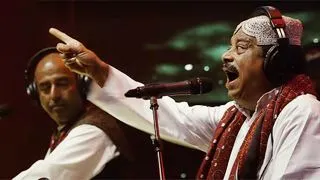
Written in a mixture of languages including Hindustani, Punjabi, and Saraiki, it was performed in 2018 during Season 11, Episode 3 of the Pakistani musical series Coke Studio, in a powerful qawwali rendition by Fareed Ayaz & Brothers and Abu Muhammad.
The piece belongs to the centuries-old Qawwal Bachon ka Gharana tradition, known for its intricate vocal improvisations and rhythmic dialogue between lead and chorus. The lyrics celebrate the ecstatic return of the piyaa (“beloved”), an image that, while couched in mystical language, carries an evident homoerotic and devotional undertone, typical of much Sufi poetry — where divine love is expressed through the language of human longing and union.